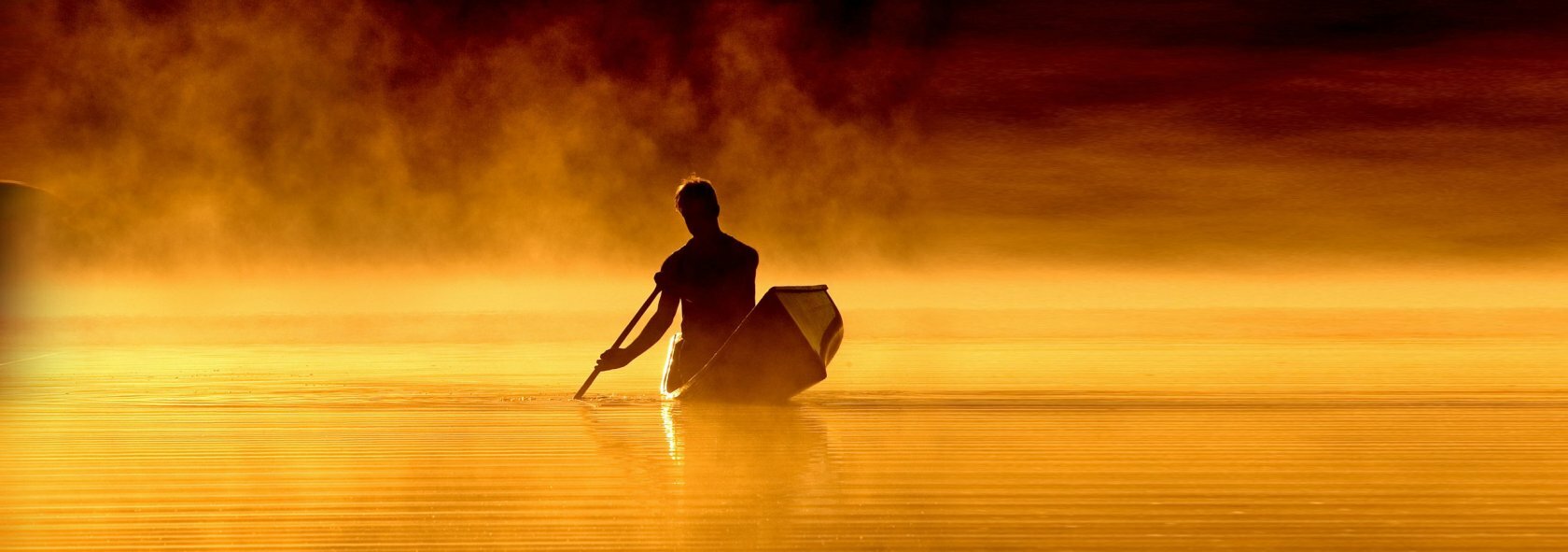
"To see a World in a Grain of Sand,
And a Heaven in a Wild Flower,
Hold Infinity in the palm of your hand,
And Eternity in an hour."
— William Blake — "Auguries of Innocence"
This poetic image is not merely an epigraph. It is the precise formula of what VOYAGER is: a project that holds everything within a single object — life, transition, eternity, beauty. We speak with Iskandar Kadyrov — founder of VOYAGER, designer, philosopher, and the man who decided to transform what civilisation had turned away from for a century.
I. Origins — Where Revolutions Are Born
— Iskandar, VOYAGER emerged in a space that barely existed — at the intersection of design, philosophy, and the subject of death. How was this idea born? What was the real catalyst?
Everything began with pain. Not abstract pain — very specific. A father came to me whose daughter was dying. She had dreamed of becoming an actress, had graduated from theatre school — and never made it to the stage. He said: 'I want to give her what she was denied. Her first and last performance.' In that request — everything. It was not a question about a coffin. It was a question about beauty. About dignity. About whether departure from life could be an act of poetry.
I could not return to what I had been doing before. I began searching. I travelled to cemeteries across Europe, studied Japanese and Persian rituals, immersed myself in history — from the Egyptian funeral barques to the medieval Ars moriendi, the art of dying. And everywhere I saw one truth: where beauty exists, acceptance follows. Where beauty has disappeared, terror moves in.
— What was the cultural backdrop against which VOYAGER arose? Why now, and why in this form?
The twentieth century did something unprecedented: it extracted death from culture. In the West, death was turned into merchandise — standardised, commercial, anonymous. In the post-Soviet world it was politically neutralised: the revolution stripped death of its sacred dimension and replaced it with bureaucratic procedure. Red coffins, impersonal concrete cemeteries — the visual expression of cultural devastation.
VOYAGER was born in that vacuum. I understood: an industry that no one had touched for generations was ripe for revolution. But revolution not through shouting or criticism — through vision. Through beauty that cannot be ignored.
— VOYAGER was presented in 2015 at the XXIII International Exhibition 'Necropol' in Russia. What happened then? Why did it cause such a sensation?
I was not entirely certain myself. Experts from around the world had seen thousands of solutions. But when they looked at VOYAGER — I saw something rare in their eyes: recognition. Not 'how interesting,' but 'this is possible.' That was proof of a principle I had been defending: conservative industries are capable of revolution, if you bring them not criticism, but vision.
VOYAGER was not simply a different design. It was a different way of thinking. Streamlined, futuristic forms — like a concert grand piano: not a single arbitrary line. Materials that return to nature. Colour — not 'upholstery', but the final sky. It was an object that declared: departure can be as beautiful as any other great event of life.
Everything began with pain. Not abstract pain — very specific. A father came to me whose daughter was dying. She had dreamed of becoming an actress, had graduated from theatre school — and never made it to the stage. He said: 'I want to give her what she was denied. Her first and last performance.' In that request — everything. It was not a question about a coffin. It was a question about beauty. About dignity. About whether departure from life could be an act of poetry.
I could not return to what I had been doing before. I began searching. I travelled to cemeteries across Europe, studied Japanese and Persian rituals, immersed myself in history — from the Egyptian funeral barques to the medieval Ars moriendi, the art of dying. And everywhere I saw one truth: where beauty exists, acceptance follows. Where beauty has disappeared, terror moves in.
— What was the cultural backdrop against which VOYAGER arose? Why now, and why in this form?
The twentieth century did something unprecedented: it extracted death from culture. In the West, death was turned into merchandise — standardised, commercial, anonymous. In the post-Soviet world it was politically neutralised: the revolution stripped death of its sacred dimension and replaced it with bureaucratic procedure. Red coffins, impersonal concrete cemeteries — the visual expression of cultural devastation.
VOYAGER was born in that vacuum. I understood: an industry that no one had touched for generations was ripe for revolution. But revolution not through shouting or criticism — through vision. Through beauty that cannot be ignored.
— VOYAGER was presented in 2015 at the XXIII International Exhibition 'Necropol' in Russia. What happened then? Why did it cause such a sensation?
I was not entirely certain myself. Experts from around the world had seen thousands of solutions. But when they looked at VOYAGER — I saw something rare in their eyes: recognition. Not 'how interesting,' but 'this is possible.' That was proof of a principle I had been defending: conservative industries are capable of revolution, if you bring them not criticism, but vision.
VOYAGER was not simply a different design. It was a different way of thinking. Streamlined, futuristic forms — like a concert grand piano: not a single arbitrary line. Materials that return to nature. Colour — not 'upholstery', but the final sky. It was an object that declared: departure can be as beautiful as any other great event of life.
"VOYAGER is not an end. It is the point from which circles expand across the water of remembrance."
— The VOYAGER Manifesto
II. Philosophy — Eternity in a Moment
— VOYAGER's tagline is 'A Journey Into Eternity.' Is that poetry, or a philosophical programme?
It is a programme expressed as poetry. Three words contain an entire cosmos of understanding. Because the moment you accept death not as an end but as a transition — everything changes. You stop spending energy denying the inevitable. You begin investing it in meaning, in beauty, in the genuine.
Egyptian pharaohs departed on boats. Vikings went on ships of fire. Shamans knew of the vessels that carry the soul across the boundaries of worlds. The VOYAGER capsule is a return to that archetype. Not a container for the body. A ship. When you choose VOYAGER, you are not choosing a coffin — you are choosing the vessel in which your soul will sail across the boundary of worlds.
— How does your project relate to Blake's lines: 'To see a world in a grain of sand... and eternity in an hour'?
This is perhaps the most precise formula for VOYAGER of anything I have ever encountered. Blake speaks of the capacity of the infinite to be present within the finite. That is precisely what VOYAGER does: within a single object, a single form, a single act of farewell — it holds everything. A person's life. Their character. Their connection to eternity.
The moment of parting is the shortest and the heaviest. But within it, if it is shaped with dignity and beauty, the fullness of everything can be present. This is not metaphor. It is the physics of consciousness: when you create a space of beauty around an extreme moment — time compresses, and eternity becomes tangible.
— You speak of three philosophical dimensions: death as a natural stage of life, aesthetics as the language of the subconscious, and consciousness as a spiritual discipline. Tell us more.
First: death is a life event — just as birth and marriage are. We greet birth with joy, we celebrate marriage as a great occasion. Why should the finale be hidden in shadow? This is a question of honesty with reality.
Second: beauty is not decoration. It is a language in which your deepest self speaks to you. When you see a beautiful monument, a beautiful ritual — your subconscious receives a signal: this is important, this is worthy, this is part of something great. I am restoring what the twentieth century destroyed: the aesthetics of death as spiritual medicine.
The third is the subtlest. In some cultures, people in their twenties already record their wishes for their final journey. This is considered strange or morbid. In reality, it is consciousness: when you understand that your time is limited — you begin to live differently. With more weight. More authentically.
It is a programme expressed as poetry. Three words contain an entire cosmos of understanding. Because the moment you accept death not as an end but as a transition — everything changes. You stop spending energy denying the inevitable. You begin investing it in meaning, in beauty, in the genuine.
Egyptian pharaohs departed on boats. Vikings went on ships of fire. Shamans knew of the vessels that carry the soul across the boundaries of worlds. The VOYAGER capsule is a return to that archetype. Not a container for the body. A ship. When you choose VOYAGER, you are not choosing a coffin — you are choosing the vessel in which your soul will sail across the boundary of worlds.
— How does your project relate to Blake's lines: 'To see a world in a grain of sand... and eternity in an hour'?
This is perhaps the most precise formula for VOYAGER of anything I have ever encountered. Blake speaks of the capacity of the infinite to be present within the finite. That is precisely what VOYAGER does: within a single object, a single form, a single act of farewell — it holds everything. A person's life. Their character. Their connection to eternity.
The moment of parting is the shortest and the heaviest. But within it, if it is shaped with dignity and beauty, the fullness of everything can be present. This is not metaphor. It is the physics of consciousness: when you create a space of beauty around an extreme moment — time compresses, and eternity becomes tangible.
— You speak of three philosophical dimensions: death as a natural stage of life, aesthetics as the language of the subconscious, and consciousness as a spiritual discipline. Tell us more.
First: death is a life event — just as birth and marriage are. We greet birth with joy, we celebrate marriage as a great occasion. Why should the finale be hidden in shadow? This is a question of honesty with reality.
Second: beauty is not decoration. It is a language in which your deepest self speaks to you. When you see a beautiful monument, a beautiful ritual — your subconscious receives a signal: this is important, this is worthy, this is part of something great. I am restoring what the twentieth century destroyed: the aesthetics of death as spiritual medicine.
The third is the subtlest. In some cultures, people in their twenties already record their wishes for their final journey. This is considered strange or morbid. In reality, it is consciousness: when you understand that your time is limited — you begin to live differently. With more weight. More authentically.
III. Value for Society — Healing Cultural Trauma
— What problem does VOYAGER solve for society — not for one individual, but at the scale of culture?
Healing. That word sounds grand, but I know no more precise one. The twentieth century inflicted a cultural trauma on our relationship with death. For millennia, death was an integral part of human spiritual life — a teacher, an initiation, a boundary between the material and the eternal. Then an era arrived and said: forget it. Forget eternity. Forget the sacred. Think only of the material.
People forgot. But the trauma remained. This is why death in modern society is surrounded by such fear and denial — it is not a natural fear of the unknown; it is a neurosis caused by cultural repression. VOYAGER offers healing: it says that death is not a forbidden topic but a sacred event that deserves preparation, that deserves to be met with dignity.
— How do people react when they first encounter VOYAGER? What happens in that meeting?
At first — laughter. Or fear. This is natural: they encounter a forbidden subject, formulated beautifully. It creates cognitive dissonance. But then something shifts. People return. They show it to friends. Conversations begin. And in those conversations, transformation of consciousness is already happening — even if a person never orders a VOYAGER capsule. They have already asked themselves: can death be beautiful? They have already admitted into their consciousness a thought that society tries to suppress. This is how cultural revolution works — not through coercion, but through inspiration.
— Does VOYAGER have an ecological dimension?
Yes, and this dimension is fundamental. VOYAGER's materials return to nature in their appointed time. No intrusion upon the landscape of eternity. This is not merely ecology — it is philosophy: life exists in a cycle, and our departure must be part of that cycle, not a violation of it. In this sense, VOYAGER is in harmony with what I do through Dolphin Hub — a platform for dialogue between humanity and nature. These are not different projects. They are one thought: we are part of this world, not its masters.
Healing. That word sounds grand, but I know no more precise one. The twentieth century inflicted a cultural trauma on our relationship with death. For millennia, death was an integral part of human spiritual life — a teacher, an initiation, a boundary between the material and the eternal. Then an era arrived and said: forget it. Forget eternity. Forget the sacred. Think only of the material.
People forgot. But the trauma remained. This is why death in modern society is surrounded by such fear and denial — it is not a natural fear of the unknown; it is a neurosis caused by cultural repression. VOYAGER offers healing: it says that death is not a forbidden topic but a sacred event that deserves preparation, that deserves to be met with dignity.
— How do people react when they first encounter VOYAGER? What happens in that meeting?
At first — laughter. Or fear. This is natural: they encounter a forbidden subject, formulated beautifully. It creates cognitive dissonance. But then something shifts. People return. They show it to friends. Conversations begin. And in those conversations, transformation of consciousness is already happening — even if a person never orders a VOYAGER capsule. They have already asked themselves: can death be beautiful? They have already admitted into their consciousness a thought that society tries to suppress. This is how cultural revolution works — not through coercion, but through inspiration.
— Does VOYAGER have an ecological dimension?
Yes, and this dimension is fundamental. VOYAGER's materials return to nature in their appointed time. No intrusion upon the landscape of eternity. This is not merely ecology — it is philosophy: life exists in a cycle, and our departure must be part of that cycle, not a violation of it. In this sense, VOYAGER is in harmony with what I do through Dolphin Hub — a platform for dialogue between humanity and nature. These are not different projects. They are one thought: we are part of this world, not its masters.
"The way we say farewell is the way we lived."
— Iskandar Kadyrov
IV. Mysticism & Metaphysics — The Invisible Dimensions
— VOYAGER contains an explicit esoteric code. The name — Voyager, traveller, wanderer. The capsule — a ship. None of this is accidental?
Nothing in VOYAGER is accidental. The name Voyager is not a marketing invention. It is a declaration of cosmic meaning: you are a traveller. Your life is a journey. Death is not the end of the journey — it is its transformation. The ancients knew this. Egyptians prepared the departed for months. Every object in the tomb carried meaning. This was not a display of wealth — it was wisdom, clothed in gold and lapis lazuli.
The ship is an archetype. Not merely an object, but a metaphor: that which carries you through the unknown. The boundary between two worlds. The instrument of transformation. When you choose VOYAGER — you are not choosing a coffin. You are choosing the vessel on which your soul will cross the boundary of worlds.
— You have studied Hermeticism, Buddhism, Kabbalah, shamanic traditions. What did you find in common across cultures in their approach to death?
Everywhere the same truth, expressed in different languages: the soul travels. The body is a temporary dwelling, an instrument. When it is destroyed — the journey continues. This is not a religious claim, although it coincides with the deepest layers of all great religions. It is an understanding that traces back to humanity's most ancient knowledge.
When you encounter this not intellectually but through your very being — everything changes. You stop fearing death. Not because you become indifferent. But because you begin to understand reality as it truly is. And if death is a journey, it deserves preparation. Respect. Beauty.
— Does VOYAGER have a mystical dimension — one that cannot be described rationally?
It does. And that is the most important dimension of all. I cannot explain it in the categories of design or philosophy. Let me say it this way: when a person first touches VOYAGER — something happens. Not merely an aesthetic experience. Something deeper. As though the form resonates with something inside — with that part of us which knows: we do not end with the body. This is not mysticism for its own sake. It is the honest response of a consciousness that has finally received permission to acknowledge what it had long felt.
Nothing in VOYAGER is accidental. The name Voyager is not a marketing invention. It is a declaration of cosmic meaning: you are a traveller. Your life is a journey. Death is not the end of the journey — it is its transformation. The ancients knew this. Egyptians prepared the departed for months. Every object in the tomb carried meaning. This was not a display of wealth — it was wisdom, clothed in gold and lapis lazuli.
The ship is an archetype. Not merely an object, but a metaphor: that which carries you through the unknown. The boundary between two worlds. The instrument of transformation. When you choose VOYAGER — you are not choosing a coffin. You are choosing the vessel on which your soul will cross the boundary of worlds.
— You have studied Hermeticism, Buddhism, Kabbalah, shamanic traditions. What did you find in common across cultures in their approach to death?
Everywhere the same truth, expressed in different languages: the soul travels. The body is a temporary dwelling, an instrument. When it is destroyed — the journey continues. This is not a religious claim, although it coincides with the deepest layers of all great religions. It is an understanding that traces back to humanity's most ancient knowledge.
When you encounter this not intellectually but through your very being — everything changes. You stop fearing death. Not because you become indifferent. But because you begin to understand reality as it truly is. And if death is a journey, it deserves preparation. Respect. Beauty.
— Does VOYAGER have a mystical dimension — one that cannot be described rationally?
It does. And that is the most important dimension of all. I cannot explain it in the categories of design or philosophy. Let me say it this way: when a person first touches VOYAGER — something happens. Not merely an aesthetic experience. Something deeper. As though the form resonates with something inside — with that part of us which knows: we do not end with the body. This is not mysticism for its own sake. It is the honest response of a consciousness that has finally received permission to acknowledge what it had long felt.
V. The Future — Where VOYAGER is Heading
— How do you see the future of VOYAGER? In which dimensions will it develop?
In several planes simultaneously. The first is cultural: VOYAGER Universe becomes a global platform for the culture of memory. Not a museum, not a gallery, not a shop. A permanent digital archive and touring presentations in cities around the world. A space where the memory of a person becomes a work of art.
The second is philosophical: The Voyager Journal — a publication that continues the conversation about death, memory, and the art of the final journey. An intellectual platform that did not previously exist. The third is technological: a dialogue between the beauty of handcraft and new materials that return even more organically to the natural cycle.
— Do you believe VOYAGER is capable of changing not just an industry, but society's consciousness about death?
I do not merely believe it — I have seen it. When one idea, once expressed beautifully and embodied in form, begins to spread — it can no longer be stopped. Cultural revolutions do not happen through manifestos and political decisions. They happen through beauty. Through an image that cannot be forgotten. Through a question that you can no longer not ask.
VOYAGER poses that question. Can departure be beautiful? Can the finale be worthy? Can farewell become an act of poetry? And once a person asks themselves that question — they are no longer who they were. Consciousness has changed. And a change in consciousness is the beginning of a change in culture.
— One final, personal question. Is VOYAGER a business project, or something more for you?
It is a confession of faith. I do not divide the world into art and commerce, spiritual and material. VOYAGER is the embodiment of everything I believe: that beauty can be a strategy for development, not decoration. That aesthetics can heal. That one person with a clear vision can change an industry that everyone believed was unchangeable.
I remember that first commission — the father who wanted to give his daughter her final performance. Everything I have done since is an answer to that request. It is no longer one specific person asking. Millions of people are silent about their right to a dignified farewell. VOYAGER is my answer to that silence.
In several planes simultaneously. The first is cultural: VOYAGER Universe becomes a global platform for the culture of memory. Not a museum, not a gallery, not a shop. A permanent digital archive and touring presentations in cities around the world. A space where the memory of a person becomes a work of art.
The second is philosophical: The Voyager Journal — a publication that continues the conversation about death, memory, and the art of the final journey. An intellectual platform that did not previously exist. The third is technological: a dialogue between the beauty of handcraft and new materials that return even more organically to the natural cycle.
— Do you believe VOYAGER is capable of changing not just an industry, but society's consciousness about death?
I do not merely believe it — I have seen it. When one idea, once expressed beautifully and embodied in form, begins to spread — it can no longer be stopped. Cultural revolutions do not happen through manifestos and political decisions. They happen through beauty. Through an image that cannot be forgotten. Through a question that you can no longer not ask.
VOYAGER poses that question. Can departure be beautiful? Can the finale be worthy? Can farewell become an act of poetry? And once a person asks themselves that question — they are no longer who they were. Consciousness has changed. And a change in consciousness is the beginning of a change in culture.
— One final, personal question. Is VOYAGER a business project, or something more for you?
It is a confession of faith. I do not divide the world into art and commerce, spiritual and material. VOYAGER is the embodiment of everything I believe: that beauty can be a strategy for development, not decoration. That aesthetics can heal. That one person with a clear vision can change an industry that everyone believed was unchangeable.
I remember that first commission — the father who wanted to give his daughter her final performance. Everything I have done since is an answer to that request. It is no longer one specific person asking. Millions of people are silent about their right to a dignified farewell. VOYAGER is my answer to that silence.
"We are building a world where the memory of a person becomes a work of art."
— Iskandar Kadyrov, Founder of VOYAGER